
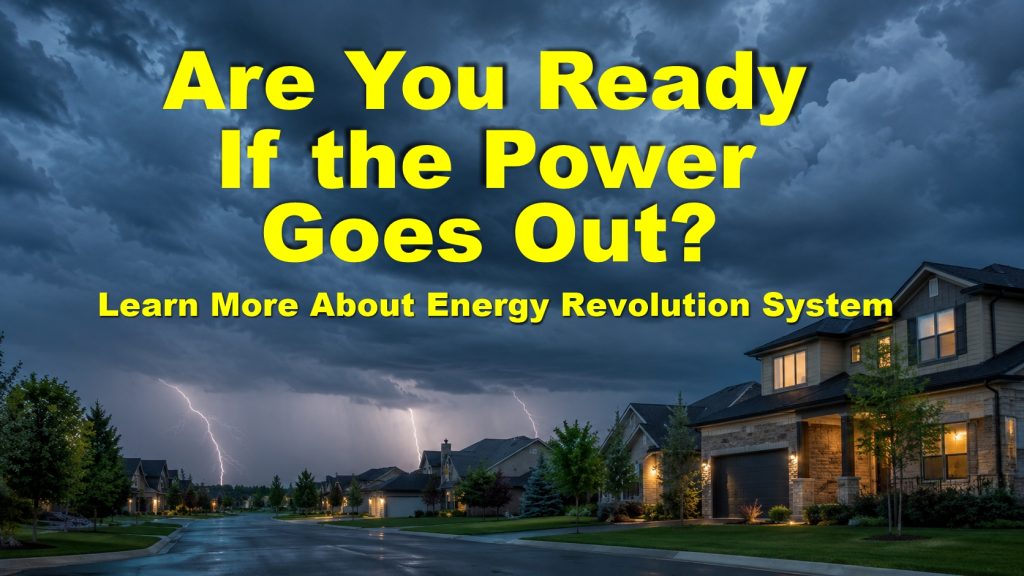
Electricity is one of those things most of us rarely think about—until it suddenly disappears.
A severe thunderstorm, equipment failure, extreme heat, wildfire, accident, or overloaded electrical grid can interrupt power with little warning. For homeowners, a blackout can mean spoiled food, lost internet access, uncomfortable temperatures, and disrupted daily routines. For construction-related businesses, the consequences can be even more serious.
Power interruptions can affect offices, workshops, warehouses, equipment-charging stations, communications, security systems, and other operations that businesses depend on every day.
That is why more people are beginning to think seriously about energy independence.
What Does Energy Independence Really Mean?
Energy independence does not necessarily mean disconnecting completely from the electric utility.
For most households and businesses, a more realistic goal is to become less dependent on a single source of electricity.
That can include a combination of energy conservation, solar power, battery storage, generators, alternative-energy systems, and other forms of backup electricity.
The objective is simple: when something happens to the electrical grid, you have additional options.
Having access to another source of power may help keep essential lights, communications, refrigeration, computers, security equipment, and other important systems operating during an outage.
For a construction company, reliable electricity can also be part of a broader business-continuity strategy. Contractors already prepare for unexpected events such as weather delays, equipment breakdowns, material shortages, and delayed customer payments. An extended electrical outage is simply another potential disruption worth considering.
The Grid Is Convenient—but It Is Still a Single Point of Dependence
America’s electrical infrastructure delivers enormous amounts of power every day, and most of the time it works remarkably well.
But no electrical system is immune to interruption.
Storms can knock down transmission lines. Transformers can fail. Excessive demand can strain local systems. Natural disasters can affect entire regions.
That does not mean everyone should expect the grid to fail. It simply means there is value in asking an important question:
If the power went out tonight, how prepared would you be?
For some people, the answer may be a conventional backup generator. Others may investigate solar panels and battery storage. Still others are interested in learning about smaller DIY and alternative-energy concepts.
One educational option for people interested in exploring alternative household energy is the Energy Revolution System.
LEARN MORE ABOUT THE ENERGY REVOLUTION SYSTEM →
Energy Independence Is Also About Controlling Costs
Backup power is only one reason to explore alternative energy.
Reducing dependence on purchased electricity may also help homeowners think differently about long-term energy costs.
Simple improvements such as efficient lighting, better insulation, smart thermostats, improved equipment efficiency, and eliminating unnecessary electrical consumption can reduce the amount of power a home or business needs in the first place.
Alternative and supplemental energy systems can become another part of that strategy.
The goal does not have to be producing every watt of electricity yourself. Even modest reductions in grid dependence can provide greater flexibility.
Preparation Creates Options
Construction professionals understand preparation better than most.
You don’t wait until a machine breaks down to begin thinking about maintenance. You don’t wait until payroll is due to start thinking about cash flow. And ideally, you don’t wait until the lights go out to begin thinking about backup electricity.
Energy independence is ultimately about having options before you need them.
If you’ve ever wondered whether there are affordable alternative-energy ideas that ordinary people can explore, the Energy Revolution System offers one approach worth investigating.
DISCOVER HOW THE ENERGY REVOLUTION SYSTEM WORKS →
Disclosure: This article contains affiliate links. ConstructionFinancing.us may receive a commission if a purchase is made through one of these links, at no additional cost to the purchaser. Individual results may vary. Always follow appropriate electrical-safety practices, manufacturer instructions, and applicable electrical codes when working with electrical or alternative-energy equipment.